How to Choose a Reliable Automatic Transmission Remanufacturer: 7 Checks Before You Buy
How to Choose a Reliable Automatic Transmission Remanufacturer: 7 Checks Before You Buy
The global driveline aftermarket reached USD 24.9 billion in 2026 and is projected to grow to USD 44.8 billion by 2033 — an 8.8% CAGR — according to Grand View Research. A major driver is fleet age: vehicles are staying on the road longer, and the US aftermarket alone is forecast to grow 5.2% in 2026, largely on repair and maintenance demand.
For workshops, distributors, and importers, remanufactured automatic transmissions are the practical answer to rising replacement costs. But "remanufactured" is not a protected term — and the difference between a genuinely remanufactured unit and one that was simply cleaned, painted, and resold is invisible in a photo or a price list. It only shows up months later, as a comeback, a double freight bill, and a customer you may not get back.
This guide gives you seven checks to run before you place an order with any automatic transmission remanufacturer — plus the red flags that should make you walk away.
Why Your Choice of Remanufacturer Matters More Than the Price
The purchase price of a transmission is only a small part of what it costs you. When a unit fails in the field, you pay for:
- Comeback labour — pull the unit out, reinstall, and often compensate the workshop or the end customer;
- Double freight — return shipping plus a replacement shipment, sometimes across borders;
- Downtime — a vehicle off the road is lost revenue for a fleet or a workshop;
- Reputation — one failed transmission can cost you a distributor relationship that took years to build.
A supplier that saves you $200 on the invoice but adds one comeback per twenty units is not cheaper. It is far more expensive — which is why supplier qualification, not price negotiation, is where your margin is actually protected.
Rebuilt vs. Remanufactured: Know the Difference
- Rebuilt / repaired: only the visibly worn parts are replaced. Tolerances, wear patterns, and valve body clearances are often not measured. Failures are typically addressed individually, not systematically.
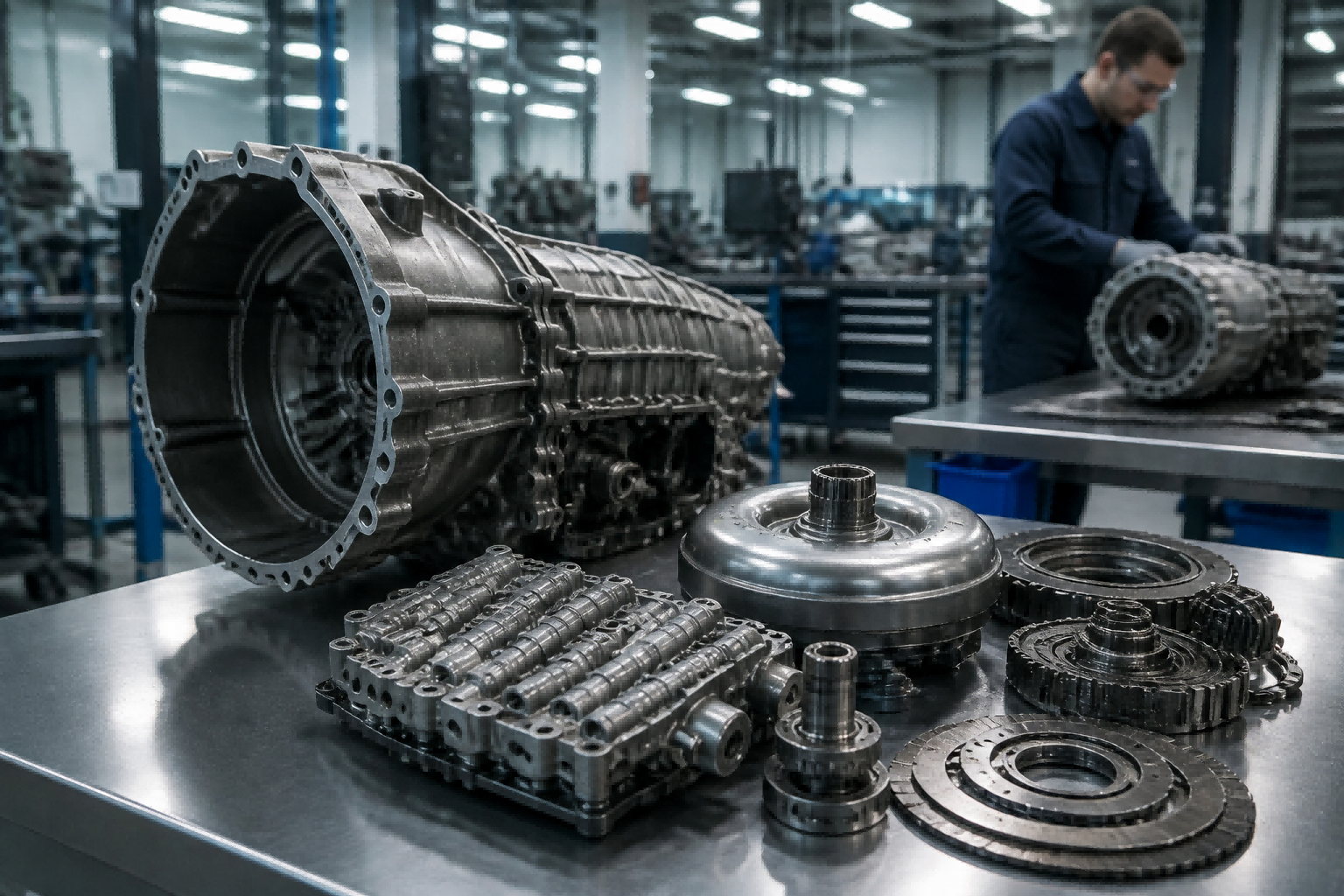
- Remanufactured: the unit is fully disassembled, every component is cleaned and measured against OEM specifications, all wear parts are replaced as standard, and the reassembled unit is tested to OEM performance standards before it ships.
Both words are used loosely in the market. When you evaluate a supplier, ask which process they actually run — and ask to see it.
The 7 Checks Before You Place an Order
1. OEM authorization and technical capability. Authorized remanufacturers work from OEM technical data, tooling, and software — not guesswork. Ask which transmission manufacturers have authorized the supplier, and how they obtain specifications, valve body calibration data, and software updates.
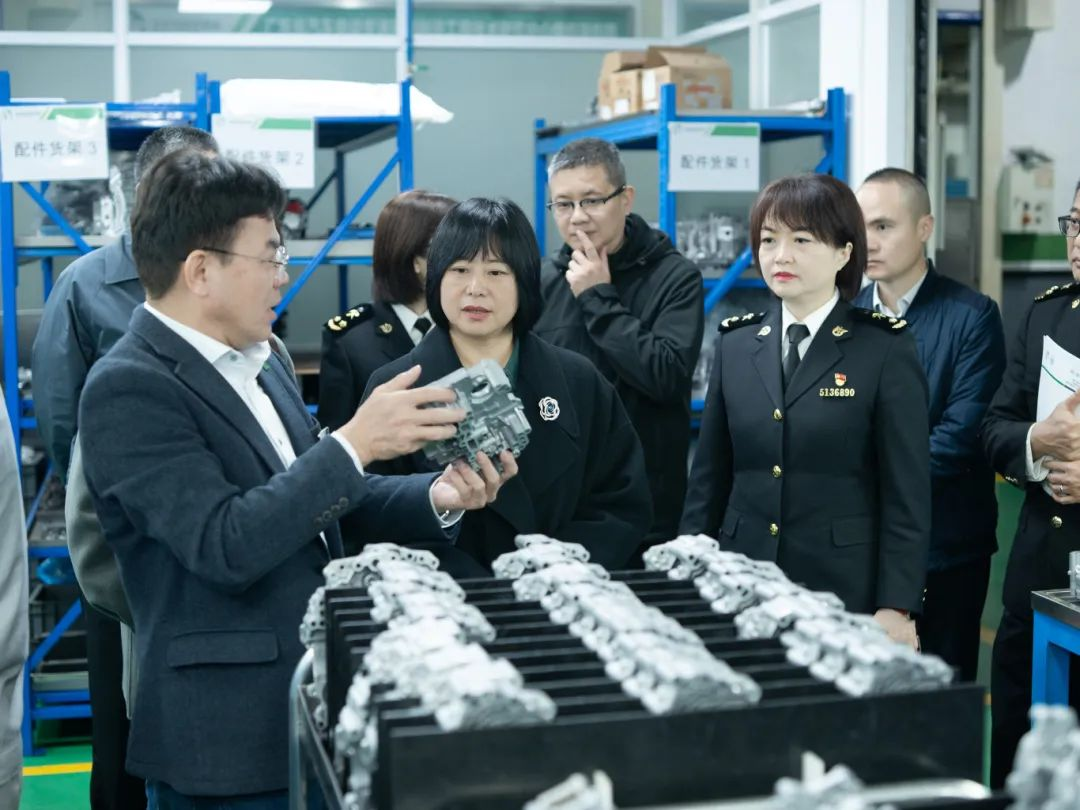
2. A genuine in-house remanufacturing process. Ask to walk the line (or see video). A real remanufacturing workflow looks like: full disassembly → sand blasting and cleaning → component inspection and measurement → replacement of all wear parts → solenoid and valve body testing → torque converter remanufacturing → precision reassembly → dynamometer testing → final inspection and packaging. If the "process" is cleaning and painting, it is not remanufacturing.
3. Testing — and the test report that proves it. Every unit should be dynamometer-tested and functionally validated before shipment, with results traceable to the unit. A supplier that cannot show a test protocol is asking you to be their quality control.

4. Warranty terms and after-sales support. The warranty should be written, with clear duration, coverage, exclusions, and a defined claims process. Equally important: can you reach a technician who understands your vehicle application when something goes wrong?
5. Product range and part availability. Look beyond complete assemblies. A strong partner can also supply valve bodies, mechatronic units, TCUs, and CVT components — which is what you need when a customer needs one component, not a whole gearbox. Broad model coverage also reduces the number of suppliers you have to manage.
6. R&D capability, patents, and traceability. Patents and engineering staff are evidence of investment in process improvement rather than trading. Ask how many invention patents and utility patents the company holds, and how each unit is traced (part number, serial number, test record).
7. Export experience and logistics support. Cross-border buyers need more than a product: export-grade packaging, correct documentation, realistic lead times, and someone who understands core returns. Ask for references from your region.
5 Red Flags to Walk Away From
- Prices 40–50% below the market average with no explanation of how (usually means worn parts were not replaced).
- No dynamometer test, no test report — "all units are tested" without documentation means nothing.
- Verbal warranty only — any warranty you cannot read is not a warranty.
- No written core exchange policy — you will be charged for cores you never agreed to.
- No traceability — if the supplier cannot tell you what was done to the specific unit you received, they cannot support it afterwards.
Questions to Ask Any Remanufacturer
| Question | What a reliable answer looks like |
|---|---|
| Are you authorized by the OEM transmission manufacturers? | Names the manufacturers and describes the technical relationship |
| Is every unit dynamometer-tested? | Yes — with a test protocol and traceable report |
| What is your warranty, in writing? | Clear duration, coverage, exclusions, and claims steps |
| Can you supply valve bodies, mechatronic units, and TCUs separately? | Yes, with part-level identification |
| What is your core exchange policy? | Documented, with clear credit terms |
| Can you provide references in my region? | Existing customers in your market |
How WWT Supports Global Buyers
WWT (Guangzhou Huadu Worldwide Automatic Transmission Co., Ltd.) is China's first automatic transmission remanufacturing enterprise. The company holds 4 invention patents and 30 utility patents, serves 20+ automotive manufacturers, and is authorized by the top three global automatic transmission manufacturers. Its 20,000 m² plant and 1,000+ employees support a full remanufacturing process — from disassembly and component inspection to dynamometer testing — and a product range that covers:
- Transmission assemblies — browse the range
- Valve bodies — view valve bodies
- Transmission control units (TCU) and mechatronic units — see control products
If you are qualifying a new supplier this season, start with the checks above — then send us your part list and we will come back with availability, testing documentation, and a quotation.

FAQ
What is the difference between a rebuilt and a remanufactured transmission?
A rebuilt transmission replaces only the visibly worn parts, while a remanufactured transmission is fully disassembled, measured against OEM specifications, rebuilt with all wear parts replaced, and performance-tested. Remanufactured units are more consistent and typically carry longer warranties.
How long does a remanufactured transmission last?
A correctly remanufactured unit using OEM-specification parts and tested to OEM performance standards is designed to deliver service life comparable to a new unit. Longevity depends on correct installation, fluid specification, and maintenance.
What warranty should I expect?
Warranties vary by supplier and application, but a professional remanufacturer will always provide written terms covering duration, coverage, exclusions, and the claims process. Get it in writing before ordering.
Can I buy valve bodies, mechatronic units, or TCUs separately?
Yes — quality remanufacturers supply components as well as complete assemblies. This is often the fastest and most cost-effective repair path for specific fault codes.
Do remanufacturers accept small or sample orders?
Many do, especially for distributors and workshops evaluating a new supplier. Ask for sample terms and lead times before committing to volume.
How are transmissions shipped internationally, and how do cores work?
Export-grade packaging and documentation are standard with experienced exporters. Core exchange terms — including credit value and return logistics — should be agreed in writing before the first shipment.
Sources
- Grand View Research — Automotive Driveline Aftermarket Industry Report 2026–2033
- Shop Owner Magazine — Automotive Aftermarket Expected to Grow 5.2% in 2026
- Future Market Insights — Engine and Transmission Remanufacturing Service Programs Market
Automechanika Shanghai 2026: Dates, Highlights & Buyer's Guide
Related Article