
Remanufactured vs New Transmission: 5 Reasons Buyers Choose Reman
Remanufactured vs New Transmission: 5 Reasons Buyers Choose Reman
For workshops, distributors and fleet buyers, the moment a customer's transmission fails, three options appear: a brand-new unit, a used unit, or a remanufactured unit. The first is the safest on paper and the most expensive in practice; the second is cheap and unpredictable. That is why an increasing share of buyers in North America, Europe and the Middle East now specify remanufactured transmissions — units restored to like-new, OEM-specification condition at a fraction of the cost.
The market data supports the shift: the global remanufactured transmission market is projected to grow from USD 8.08 billion in 2026 to USD 10.29 billion by 2030, and remanufacturing sits inside a broader automotive remanufacturing economy expanding at close to a 10% CAGR.
But "remanufactured" is not a protected term, and the gap between a genuine remanufactured unit and a cleaned-up used unit is invisible until it fails. This article compares the three options honestly — and explains the five reasons buyers keep choosing reman.
The Three Options, Defined
| Option | What it means | Typical reality |
|---|---|---|
| New (OEM) | Factory-new unit | Highest price; sometimes months of lead time; can exceed the vehicle's value |
| Used (salvage) | Pulled from a donor vehicle | Cheapest; unknown wear history; no meaningful warranty |
| Remanufactured | Fully disassembled, cleaned, measured against OEM specs, all wear parts replaced, then performance-tested | OEM-spec quality with documented testing and a written warranty |
The distinction that matters most is remanufactured vs. rebuilt. A rebuilt unit replaces only the visibly worn parts. A remanufactured unit is rebuilt to a standard: every component is measured, all wear parts are replaced as a rule, and the finished unit is tested before it ships.
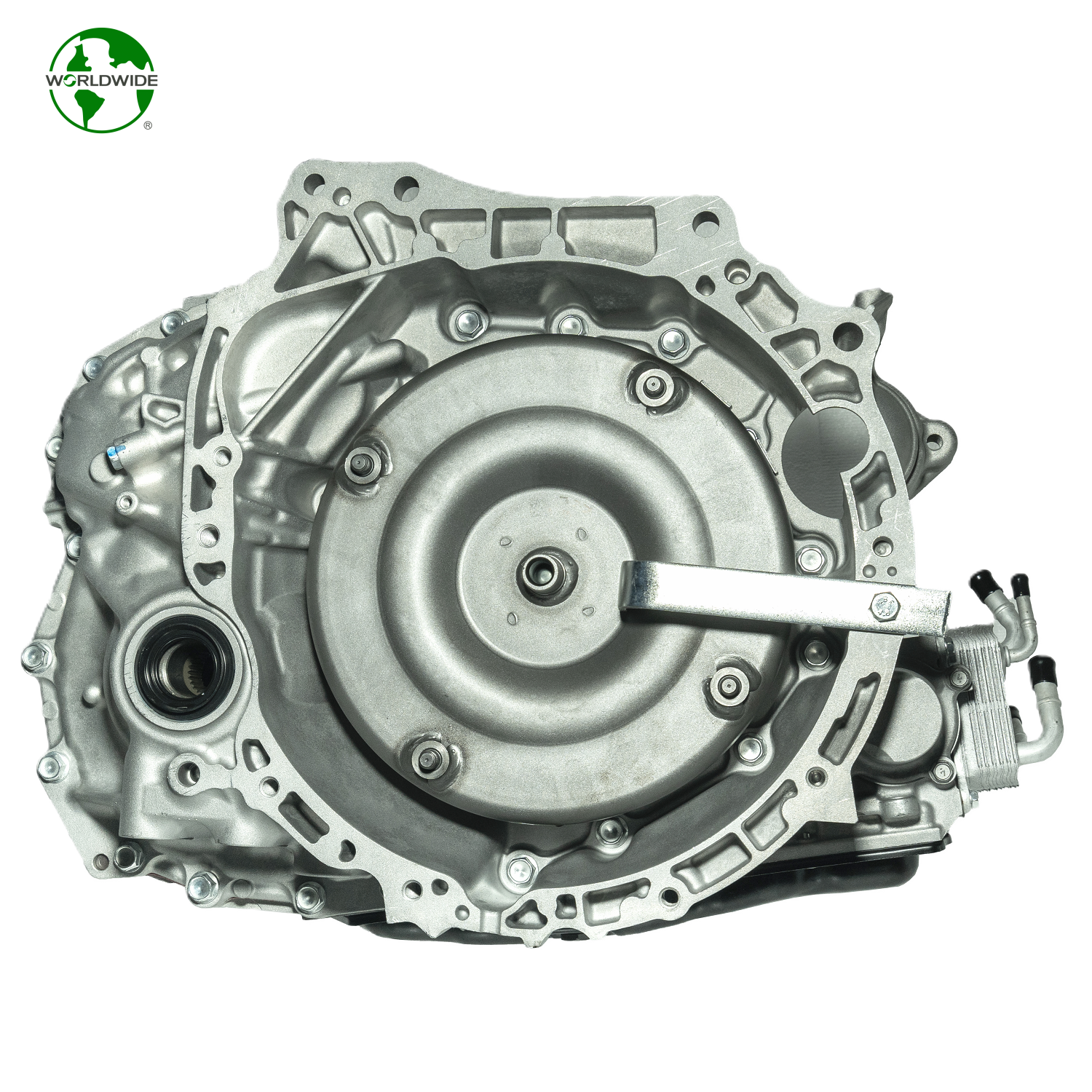
5 Reasons Buyers Choose Remanufactured
1. The cost gap is large — and it is not a quality gap.
Remanufactured parts typically cost 30–50% less than new OEM equivalents, according to industry estimates submitted to the US FTC by the Motor & Equipment Manufacturers Association (MEMA). For a workshop, that difference is the margin between winning and losing a job.
2. Availability and lead time.
New OEM units are frequently backordered — the aftermarket learned this the hard way during recent supply disruptions, when mechatronic units, valve bodies and control modules had long lead times. A remanufacturer with stock shortens the wait from weeks to days, and a shorter wait means fewer days of lost revenue for the customer.
3. Documented testing instead of hope.
Quality remanufacturers dynamometer-test every unit and keep results traceable to the specific unit. Used units carry no test record at all; a new unit carries a factory record that you can't act on. Remanufacturing is the only option where you can actually ask for the test protocol before you buy.
4. Sustainability that procurement teams now ask for.
Remanufacturing conserves up to roughly 85% of the energy and raw materials required to build an equivalent new part, per industry estimates. With tightening emissions rules, right-to-repair momentum and green procurement policies, remanufactured components are increasingly specified by insurers, fleets and public buyers — not only by cost-conscious workshops.
5. Warranty plus core model equals predictable economics.
Reputable remanufacturers back units with a written warranty covering duration, coverage and a defined claims process, and they operate a documented core exchange policy. That combination turns an unpredictable repair into a line item you can quote confidently.
When New Still Makes Sense
Honest comparison matters, and there are cases where new is the right call:
- The vehicle is still under the manufacturer's warranty, and non-OEM parts could void coverage;
- The unit is rare or low-volume, with no remanufactured supply;
- The transmission has catastrophic case damage, so there is no rebuildable core;
- The customer contractually requires OEM-new parts.
In every other scenario, the question is not "new or not" — it is "which remanufacturer."
What You Actually Pay: A Comparison
| New OEM | Used | Remanufactured | |
|---|---|---|---|
| Unit price | Highest | Lowest | 30–50% below new |
| Warranty | Factory terms | Rarely any | Written, with claims process |
| Test documentation | Factory record | None | Unit-level test record |
| Lead time | Often long | Variable | Usually stock-short |
| Risk of comeback | Lowest | Highest | Low, when the process is real |
The cheapest unit on the invoice is rarely the cheapest unit over the life of the repair. One comeback wipes out the price advantage of a used unit — and often the profit on several other jobs.
How to Compare Remanufacturers Fairly
Price alone tells you nothing. Compare suppliers on:
- OEM authorization and engineering depth — technical data, tooling and software access;
- Range — complete assemblies and valve bodies, mechatronic units, TCUs and CVT components;
- Testing — dynamometer testing and traceable reports;
- Warranty and core policy — in writing, before the first shipment;
- Export capability — packaging, documentation and lead times.
We cover these checks in detail in our guide on choosing a reliable transmission remanufacturer.
About WWT
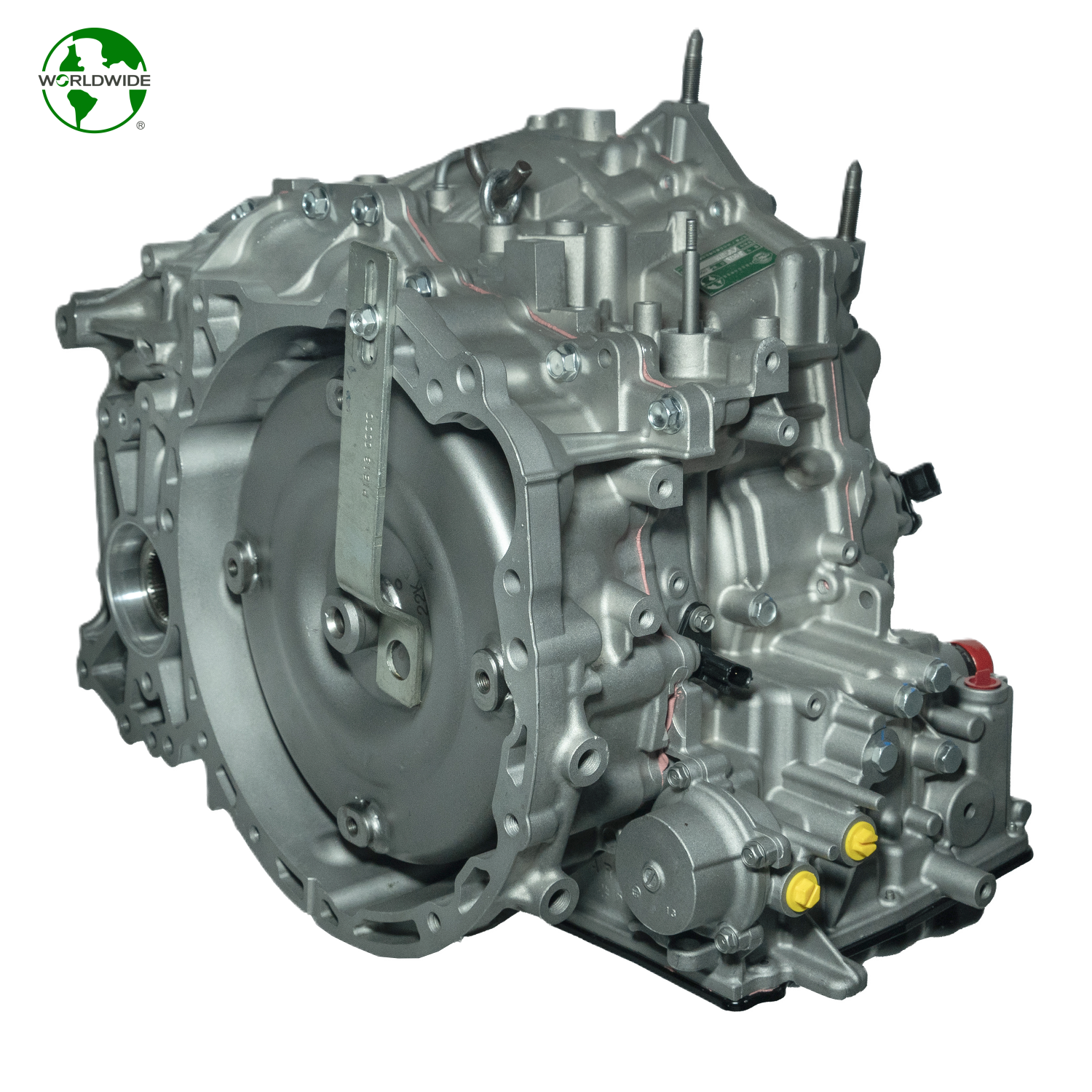
WWT (Guangzhou Huadu Worldwide Automatic Transmission Co., Ltd.) is China's first automatic transmission remanufacturing enterprise. The company holds 4 invention patents and 30 utility patents, serves 20+ automotive manufacturers, and is authorized by the top three global automatic transmission manufacturers. Its 20,000 m² plant and 1,000+ employees run a full 11-step remanufacturing process — from disassembly and component measurement to dynamometer testing — covering:
If you are planning a sourcing trip to Asia, note that Automechanika Shanghai 2026 runs 2–5 December at NECC Shanghai, with visitor pre-registration free of charge until 31 October 2026 — see our show guide for details.
Ready to compare options for your part list? Send us an inquiry — our team responds within 24 hours with availability, testing documentation and a quotation.
FAQ
Is a remanufactured transmission as good as new?
Yes, when it comes from a qualified remanufacturer: full disassembly, measurement against OEM specifications, replacement of all wear parts, and end-of-line performance testing. The critical variable is the supplier's process, not the category.
How much can I save compared with a new transmission?
Industry estimates put remanufactured parts at 30–50% below new OEM equivalents, depending on model and core condition.
Do remanufactured transmissions come with a warranty?
Reputable remanufacturers provide a written warranty with defined duration, coverage, exclusions and a claims process. Always confirm the terms before ordering.
What is a core charge, and how does core exchange work?
A core charge is a refundable deposit on the old unit you return. The remanufacturer inspects and rebuilds it for the next customer, which is what keeps remanufactured pricing low. Core credit terms and return logistics should be agreed in writing.
Can you remanufacture CVT and hybrid transmissions?
Yes. Remanufacturing covers conventional automatics as well as CVT units, mechatronic units, TCUs and components for new-energy vehicles — in fact, hybrids and EVs are expanding the remanufacturing pool rather than shrinking it.
How do I verify a supplier's testing claims?
Ask for the test protocol and a unit-level test record, and — if you visit — ask to see the dynamometer and the final inspection station. A supplier that cannot show either is asking you to be their quality control.
Sources
- The Business Research Company / Research and Markets — Remanufactured Transmission Global Market Report 2026
- Motor & Equipment Manufacturers Association (MEMA) — submission to the US FTC on remanufactured parts cost and energy savings
- Fortune Business Insights — Automotive Remanufacturing Market, 2026–2034
- Messe Frankfurt / Automechanika Shanghai — official 2026 show information
Importing Remanufactured Transmissions from China: The 2026 Buyer's Checklist
How to Choose a Reliable Automatic Transmission Remanufacturer: 7 Checks Before You Buy
Related Article
